

This Crochet Leaf Vine Pattern creates a beautiful green garland with delicate handmade leaves arranged along a simple crocheted stem. It’s a lovely project for adding a natural touch to your home decor, decorating shelves, or creating a charming hanging vine. The pattern is suitable for crocheters who enjoy simple, repetitive stitches and want to practice shaping leaves. In this tutorial, you’ll learn which yarn and hook to use, how to crochet each leaf, and how to build the vine using the included stitch diagram.

Table of Contents
Why You’ll Love This Crochet Leaf Vine Pattern
This Crochet Leaf Vine Pattern is a simple and beautiful way to create handmade greenery without needing complicated crochet techniques. The finished design features a long, narrow stem with small leaves arranged alternately along both sides, giving it a natural vine-like appearance. Moreover, the repeated leaf construction makes the project easy to follow once you understand the basic stitches. Whether you want to decorate a shelf, brighten a wall, or add a handmade touch to another crochet project, this green leaf garland is a lovely option.
What Is a Crochet Leaf Vine?
A crochet leaf vine is a decorative piece made from a crocheted central stem with individual leaves attached along its length. Unlike separate crochet flowers or appliqués, this design creates the appearance of a continuous growing branch.
For this particular style, the leaves are arranged alternately along the stem, with one pointing to the left and the next pointing to the right. This arrangement gives the finished vine a balanced and natural look.
The stem is worked as a continuous chain-based structure, while each leaf is formed using several crochet stitches worked into a short foundation chain. As a result, the leaves have an elongated oval shape with a slightly pointed end.
You can keep the entire vine in one shade of green for a realistic botanical appearance. Alternatively, you can use different shades to create a softer, more decorative look.
Why This Green Crochet Leaf Garland Is Perfect for Beginners
One of the best things about this Crochet Leaf Vine Pattern is that it uses familiar crochet techniques rather than complicated stitch combinations. Therefore, it’s a useful project for beginners who already know how to make basic stitches and want to practice working with different stitch heights.
Additionally, the repeated construction makes it easier to maintain a consistent appearance throughout the vine. Once you complete the first few leaves, you’ll become familiar with the placement and rhythm of the stitches.
Here are some reasons to try this project:
- Simple construction: The design uses a central stem and repeated leaf shapes.
- Beginner-friendly stitches: You can practice chain stitches, single crochet, double crochet, and slip stitches.
- Easy to customize: You can make the vine longer or shorter by changing the number of leaves.
- Minimal materials: You only need yarn, a suitable crochet hook, scissors, and a yarn needle.
- Versatile decoration: The finished vine works well in different rooms and decorative arrangements.
Furthermore, the project doesn’t require a large amount of yarn, making it a practical choice when you want to use leftover green yarn from previous projects.
What Makes This Crochet Vine Pattern Special?
The main feature of this design is the way each leaf connects to the central stem. Instead of making several leaves separately and sewing them together afterward, the leaves are incorporated into the vine as you work.
This creates a neat, connected appearance and reduces the amount of finishing work.
Another lovely detail is the alternating leaf placement. Each leaf extends in the opposite direction from the previous one, creating a natural branch effect. The elongated leaf shape also adds texture without making the finished decoration look too bulky.
For the best result, try to maintain consistent yarn tension throughout the project. This helps keep the leaves similar in size and prevents the stem from becoming uneven.
Crochet Leaf Vine Project Size and Yarn Requirements
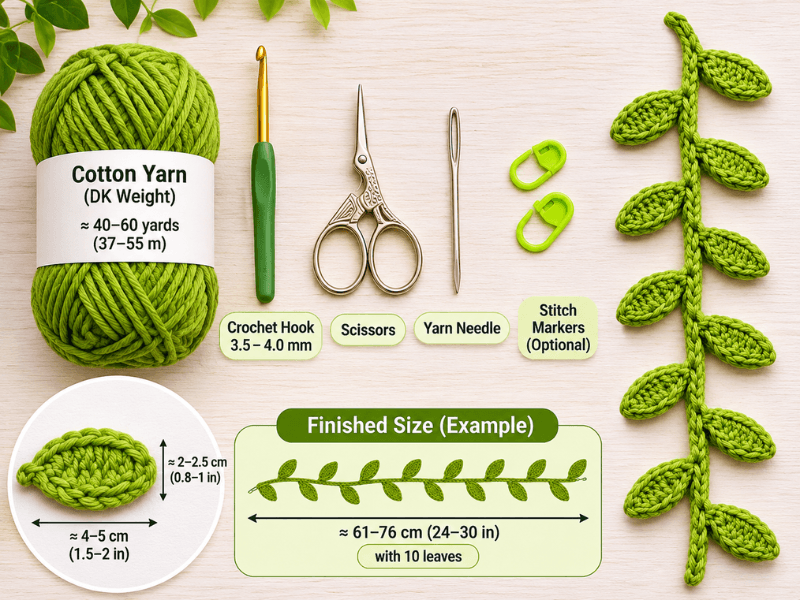
Before starting, it’s helpful to decide how long you want your finished vine to be. The measurements below provide a practical starting point for a medium-sized decorative garland with approximately 10 leaves.
Suggested finished dimensions:
| Project detail | Approximate measurement |
|---|---|
| Total vine length | 24–30 inches |
| Total vine length in centimeters | 61–76 cm |
| Number of leaves | 10 leaves |
| Individual leaf length | 1.5–2 inches |
| Individual leaf length in centimeters | 4–5 cm |
| Distance between leaf attachment points | 1.5–2 inches |
| Main stem width | 0.2–0.3 inches |
These measurements are estimates rather than fixed dimensions. Your final size will depend on the yarn weight, crochet hook, stitch tension, and the number of leaves you make.
How Much Yarn Do You Need?
For a medium crochet leaf vine measuring approximately 24–30 inches, plan for around 40–60 yards of green yarn. This is a working estimate for the stem and approximately 10 leaves, with some variation depending on your stitch tension and yarn thickness.
A single 50-gram skein will usually provide enough yarn for this sample, depending on the yarn’s yardage.
| Material | Suggested amount |
|---|---|
| Green yarn | 40–60 yards |
| Yarn weight | DK or light worsted |
| Crochet hook | 3.5–4.0 mm |
| Scissors | 1 pair |
| Yarn needle | 1 |
| Stitch marker | 1, optional |
If you’re planning a longer garland, it’s better to have extra yarn available. For example, a vine measuring 36–48 inches may require approximately 65–90 yards, depending on the number and size of the leaves.
Helpful sizing tip: Make one complete leaf first and measure it before continuing. If it’s larger or smaller than expected, adjust your hook size or yarn tension before making the remaining leaves. This small step will help keep your finished vine looking balanced and consistent.
Creative Ways to Use Handmade Crochet Vines
A finished crochet leaf vine can be used in more ways than you might expect. Because it’s lightweight and flexible, you can arrange it around different objects without needing complicated installation methods.
Here are a few decorating ideas:
- Shelf decoration: Place the vine along a bookshelf or floating shelf to add a touch of handmade greenery.
- Wall decoration: Hang it vertically or horizontally as a simple botanical accent.
- Window decoration: Arrange it around a window frame for a soft decorative detail.
- Plant decoration: Place it around a plant pot or decorative basket to create a coordinated look.
- Gift wrapping: Use a short crochet vine as a reusable handmade gift decoration.
- Table styling: Add it to a centerpiece or decorative tray for a natural touch.
You can also combine several vines to create a fuller garland for a mantel, bedroom, or craft room.
Overall, this Crochet Leaf Vine Pattern is a practical project that combines simple stitches, minimal materials, and plenty of decorating possibilities. Once you understand how the leaves are formed and connected to the stem, you can easily adjust the length and appearance to suit your next crochet project.
Materials and Tools for Your Crochet Leaf Vine
Before starting your Crochet Leaf Vine Pattern, gather all the materials you’ll need. Fortunately, this project doesn’t require many supplies, and most of them are probably already in your crochet collection. The most important choices are the yarn weight and crochet hook size because they affect the shape, texture, and overall appearance of the leaves. For a lightweight decorative vine, DK or light worsted yarn in a natural green shade is a good starting point. Below, you’ll find the recommended materials and some helpful tips for choosing the right supplies.
Choosing the Best Yarn for Crochet Leaves
The yarn you choose plays an important role in how your finished crochet leaves look. Since this design features small, defined leaves, it’s best to use a yarn that allows you to see individual stitches clearly without making the vine too thick.
Cotton yarn is an excellent option because it holds its shape well and creates neat stitch definition. Additionally, cotton has a slightly firm texture, which helps the leaves maintain their appearance after they’re finished.
Acrylic yarn is another practical choice. It’s usually affordable, comes in many shades of green, and feels soft to work with. However, some acrylic yarns are more flexible, so you may need to adjust your tension to keep the leaves from looking too loose.
For this pattern, consider the following options:
| Yarn type | Main benefit | Best for |
|---|---|---|
| Cotton yarn | Excellent stitch definition | Neat, structured leaves |
| Acrylic yarn | Affordable and widely available | Everyday decorations |
| Cotton-acrylic blend | Combines softness and structure | Flexible decorative vines |
| Mercerized cotton | Smooth finish and subtle sheen | Detailed botanical designs |
For a natural appearance, choose a medium or soft green shade. You can also combine two or three green tones if you want to create a more varied botanical effect.
Recommended Crochet Hook Size
The crochet hook determines how tightly or loosely your stitches sit together. For this Crochet Leaf Vine Pattern, a smaller hook generally works well because it helps create compact leaves with clearly defined edges.
A 3.5 mm or 4.0 mm crochet hook is a good starting point when using DK or light worsted yarn.
However, the ideal hook size can vary depending on the yarn brand and your personal tension. If your leaves look too loose or have large gaps between stitches, try a smaller hook. On the other hand, if the fabric feels too stiff and difficult to work into, move up one hook size.
| Yarn weight | Suggested hook size |
|---|---|
| Fingering weight | 2.5–3.0 mm |
| Sport weight | 3.0–3.5 mm |
| DK weight | 3.5–4.0 mm |
| Light worsted weight | 4.0–4.5 mm |
Helpful tip: Try making one sample leaf before crocheting the entire vine. This allows you to check the leaf size and stitch density without wasting yarn.
Essential Crochet Supplies and Accessories
Besides yarn and a crochet hook, you’ll need a few basic tools to complete the project neatly. These supplies make the crocheting and finishing process easier, especially when you’re working with several small leaves.
| Tool | Purpose |
|---|---|
| Crochet hook | Creates the stem and leaves |
| Yarn scissors | Cuts yarn cleanly |
| Tapestry needle | Hides loose yarn ends |
| Stitch markers | Marks important stitch positions |
| Measuring tape | Checks the vine’s length |
| Blocking mat | Helps shape the finished leaves |
| Rust-resistant pins | Holds leaves in place during blocking |
You don’t necessarily need every item listed above. For example, stitch markers are optional if you’re comfortable identifying your stitches. Similarly, blocking equipment is useful but not essential for a simple decorative vine.
Nevertheless, a tapestry needle and sharp scissors are particularly helpful for achieving a clean finish.
Choosing the Right Shade of Green Yarn
Green is the most natural color choice for a crochet leaf vine, but not all shades create the same visual effect. The right color depends on where you plan to display your finished garland and the overall style you’re trying to achieve.
Here are some popular color options:
- Sage green: A soft, muted shade that works beautifully with neutral home decor.
- Olive green: A deeper natural color that gives the leaves a botanical appearance.
- Forest green: A rich shade that creates a more noticeable decorative accent.
- Mint green: A light, fresh color suitable for delicate and playful designs.
- Moss green: An earthy shade that gives the finished vine a natural woodland feel.
You can also use two shades of green to create subtle contrast between the leaves and the central stem. However, if you prefer a simple, realistic look, using one consistent green shade is perfectly fine.
How Much Yarn Do You Need for a Crochet Leaf Garland?
The amount of yarn depends mainly on the length of your vine, the number of leaves, and their individual size. For the medium-sized sample described in Part 1, approximately 40–60 yards of yarn should be a reasonable estimate.
Use this table as a general planning guide:
| Finished vine length | Approximate number of leaves | Estimated yarn |
|---|---|---|
| 12 inches | 5 leaves | 20–30 yards |
| 24 inches | 10 leaves | 40–60 yards |
| 36 inches | 15 leaves | 60–80 yards |
| 48 inches | 20 leaves | 80–100 yards |
These quantities are estimates rather than exact pattern requirements. Larger leaves, thicker yarn, and tighter stitches can increase yarn consumption.
If you’re using leftover yarn, it’s a good idea to measure your available amount before starting. Also, keep a little extra yarn for finishing and weaving in the ends.
Before moving on: Check that your yarn and hook work well together, prepare your tools, and make a small test leaf. Once everything looks right, you’ll be ready to explore the crochet stitches and symbols used in the pattern.
You can find more crochet on my Facebook page and my Pinterest profile.
Frequently Asked Questions About Crochet Leaf Vine Patterns
If you’re making a crochet leaf vine for the first time, you may have a few questions about the stitches, yarn, and construction. These answers will help you understand how the leaves are formed, how to connect them to the stem, and how to create a beautiful green crochet garland.
How Do You Crochet a Leaf Vine Step by Step?
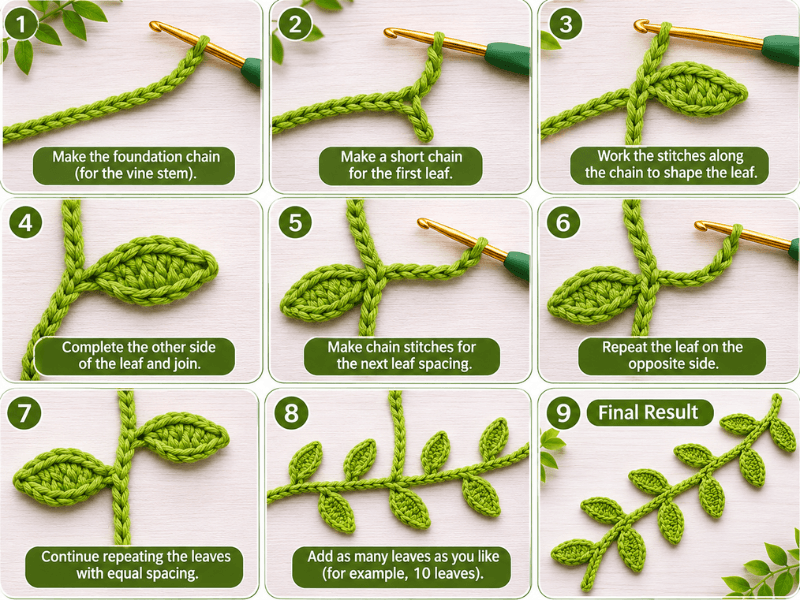
To crochet a leaf vine, start by creating a foundation chain for the central stem. Next, work a small leaf using a combination of chain stitches, single crochet, half double crochet, and double crochet. These different stitch heights help create the rounded sides and pointed shape of each leaf.
Once the first leaf is complete, continue crocheting the stem and repeat the leaf construction along its length. Alternate the direction of the leaves to create a natural-looking vine.
Here is a simple overview of the process:
| Step | What to do |
|---|---|
| 1 | Make the initial foundation chain. |
| 2 | Start the first leaf with chain stitches. |
| 3 | Work different crochet stitches to shape the leaf. |
| 4 | Complete the opposite side of the leaf. |
| 5 | Continue the central vine stem. |
| 6 | Repeat the leaves at regular intervals. |
| 7 | Fasten off and weave in loose ends. |
For the best result, keep your stitch tension consistent and check the spacing between leaves as you work. This will help the finished garland look balanced.
What Yarn Is Best for Making a Crochet Leaf Vine?
Cotton yarn is one of the best choices for making a crochet leaf vine because it provides excellent stitch definition and helps small leaves maintain their shape. It also has a slightly firm texture, which works well for decorative botanical projects.
However, acrylic yarn is another good option, especially if you want a softer and more affordable garland. Cotton-acrylic blends can also provide a nice balance between flexibility and structure.
For this project, DK-weight cotton or a cotton-acrylic blend is a practical choice. A 3.5 mm or 4.0 mm crochet hook is a good starting point, depending on your yarn and tension.
How Do You Make Crochet Leaves for a Garland?
Crochet leaves are generally made by working stitches around a short foundation chain. Begin with a few chain stitches, then work single crochet, half double crochet, and double crochet along one side to create the wider part of the leaf.
Next, work along the opposite side of the foundation chain to form the other edge. A slip stitch or another suitable finishing stitch can help define the pointed tip.
To turn individual leaves into a garland, attach them to a crocheted central stem or incorporate them as you work. Arrange the leaves in alternating directions and leave consistent spaces between them.
A useful tip is to make all your leaves approximately the same size before assembling the garland. This creates a more uniform and professional finish.
What Crochet Stitches Are Used to Make a Crochet Leaf Vine?
A crochet leaf vine typically uses a combination of basic stitches to create the stem and shape the leaves. Each stitch has a different purpose, helping the finished design look more natural.
| Crochet stitch | Abbreviation | How it’s used |
|---|---|---|
| Chain | CH | Creates the foundation and leaf structure |
| Slip stitch | SL ST | Connects sections and finishes details |
| Single crochet | SC | Creates compact stitches along the leaf |
| Half double crochet | HDC | Adds gentle height and rounded shaping |
| Double crochet | DC | Forms wider sections of the leaf |
The combination of these stitches creates the gradual shape needed for a simple crochet leaf. You don’t need complicated techniques to achieve a lovely result. Instead, focus on placing each stitch correctly and maintaining even tension throughout the project.
Final tip: If you’re new to crochet leaf patterns, practice making one or two leaves separately before working on the complete vine. This will help you become comfortable with the stitch placement and create more consistent leaves for your finished garland.
Conclusion
This Crochet Leaf Vine Pattern is a simple and enjoyable way to create beautiful handmade greenery for your home. With basic crochet stitches, a little green yarn, and a few essential tools, you can make a decorative garland featuring delicate leaves along a natural-looking stem.
Throughout this tutorial, you’ve learned about the recommended materials, yarn choices, crochet stitches, and techniques used to create the leaves. The stitch diagram also provides a helpful visual reference as you work through the design.
Moreover, you can easily customize your crochet leaf vine by changing its length, adjusting the number of leaves, or experimenting with different shades of green. Whether you display it on a shelf, hang it on a wall, or use it as part of another handmade decoration, the finished garland adds a lovely botanical touch.
Now it’s time to gather your supplies and start crocheting! Take your time with the first few leaves, keep your stitches consistent, and enjoy creating your own handmade green leaf garland.
If you enjoyed this pattern, save it for your next crochet project and share your finished creation with other crochet lovers!

1 thought on “Crochet Leaf Vine Pattern: 5 Easy Steps for a Beautiful Garland”